In Human Design, a transit is where a planet or point stands in the sky right now, written as a gate and line on the same wheel your birth chart uses. Your chart never changes. Transits are the moving backdrop it meets each day.
What a transit looks like
The sky is divided into 64 gates, each 5.625 degrees wide, and each gate into six lines. At any moment the Sun, the Earth, the Moon, the two lunar nodes and the planets from Mercury to Pluto each fall in one gate and one line: 13 positions, in the same format as a chart.
The Earth is always exactly opposite the Sun, and the South Node opposite the North Node. The calculation is astronomy. What the gates are said to mean belongs to the system.
The Sun sets the weekly theme
The Sun moves about one degree a day, so it spends close to six days in each gate and about a day in each line. Across the year it passes through all 64 gates once. Gate 41 begins at 2 degrees of Aquarius, and the Sun reaches it around 22 January, which the system treats as the start of its yearly cycle.
In the system, the Sun's gate applies to everybody, whoever you are. People who follow transits read it like the weather: the same for the whole neighborhood, felt differently inside each house.
The Moon sets the daily tone
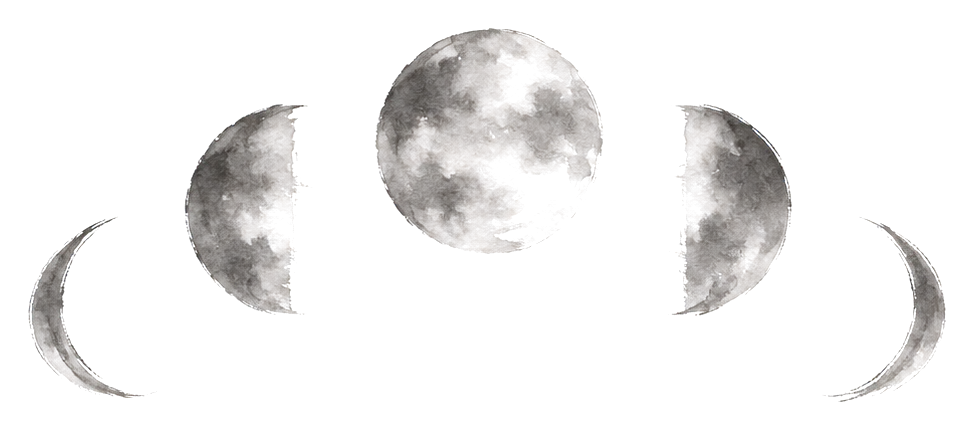
The Moon is the fastest body. It crosses a gate in roughly ten hours (nine to eleven and a half, depending on its speed) and a line in about one hour and forty minutes, and it passes through all 64 gates in about 27.3 days. If the Sun gives the week its theme, the Moon changes the mood between breakfast and dinner.
That speed is also why birth time matters in a natural chart: a few hours of difference can complete or break a channel.
Slower bodies are background
For a daily check you can leave the slow planets alone. They matter when you compare the sky with your own gates, since they stay long enough to feel like a condition rather than an event.
| Body | Time in one gate |
|---|---|
| Moon | About 10 hours |
| Sun and Earth | 5 to 6 days |
| Mercury, Venus, Mars | Days to weeks, depending on speed and when they appear to move backward |
| Jupiter | About 2 months |
| North and South Node | About 3.5 months, traveling backward |
| Saturn | About 5.5 months |
| Uranus | About 1.25 years |
| Neptune | More than 2.5 years |
| Pluto | Roughly 4 years, with wide variation |
How a transit meets your chart
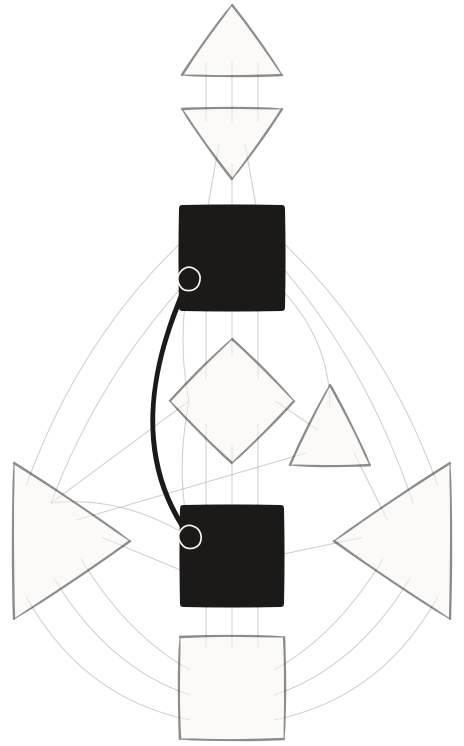
The system's central idea is that a transit gate can pair with a gate you carry. If your chart holds gate 34 and the Sun is in gate 20, channel 20-34 is complete for as long as the Sun stays there, and the Throat and the Sacral are joined. According to the system:
- A transit that completes a channel makes the centers it joins behave as defined for a while. In an open center you may feel its theme more strongly than usual, or take it on from the people around you.
- A transit gate you already carry only strengthens a gate that is part of you.
- A transit gate whose partner is in neither your chart nor the sky that day completes no channel, though the gate itself is active.
Reflectors are described as the most affected, because they have no defined centers of their own. The Reflector page and lunar authority cover this.
Using the page day to day
- Note the Sun gate and the Moon gate when you start the day.
- Check whether either completes a channel with one of your gates. With your chart, the page does this for all 13 bodies.
- Write one line at night on how the day felt.
- Keep this up for three or four weeks before drawing conclusions. A written log is the only way to tell a real pattern from a story you fit afterward.
Honest framing
Transits in Human Design resemble astrological transits, and like them they have no scientific support. The positions are accurate, but no study has shown that a gate in the sky changes how you feel. Do not plan decisions about health, money or other people around it.
Your own gates are in your chart, from the TwoInks calculator. Read on about the nine centers, compatibility and how positions are calculated.